Vibes
HowExposed.AI
March 2026
Every job has an AI exposure score. Most people haven't checked theirs.
When Andrej Karpathy, co-founder of OpenAI, scored 342 US occupations for AI exposure using Bureau of Labor Statistics data, I thought the data was important but hard to access. His visualisation was a treemap aimed at researchers. Most people would find it too big picture and abstract.
Ultimately, most people are first and foremost concerned with how AI will impact their own job, and their family.
Vibe coding a simple app
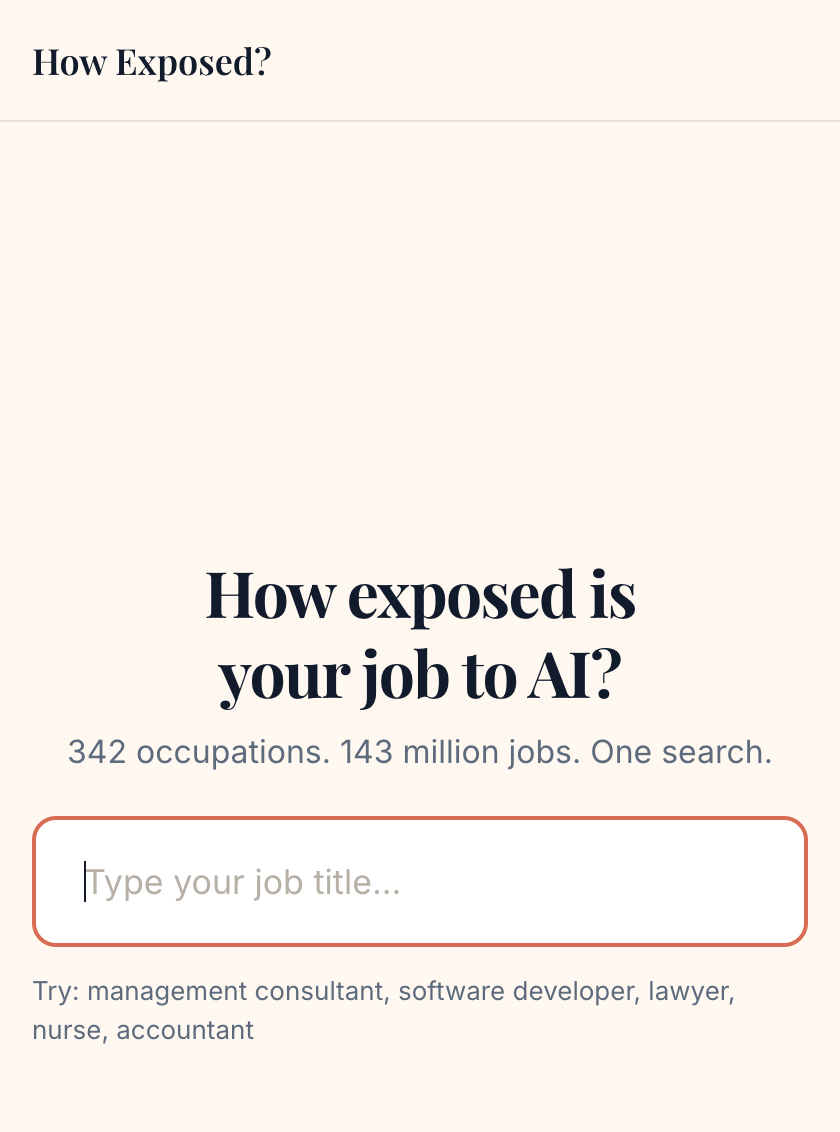
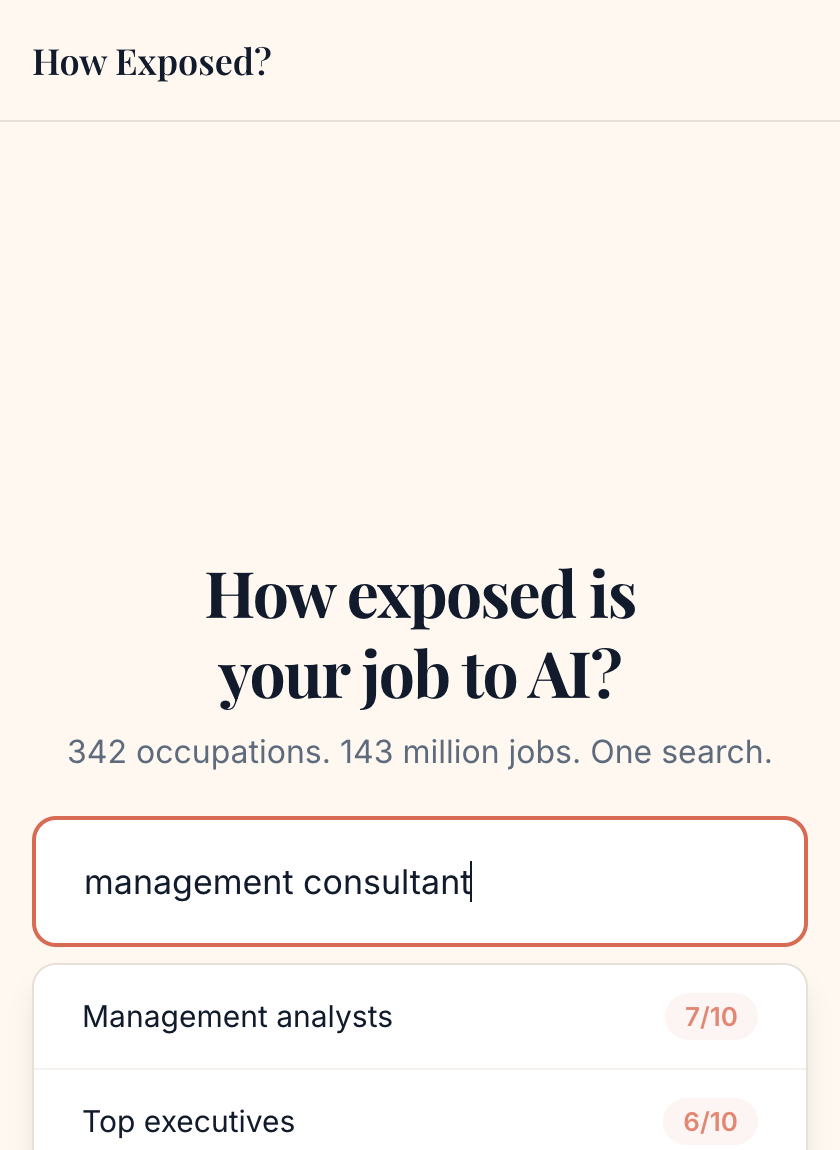
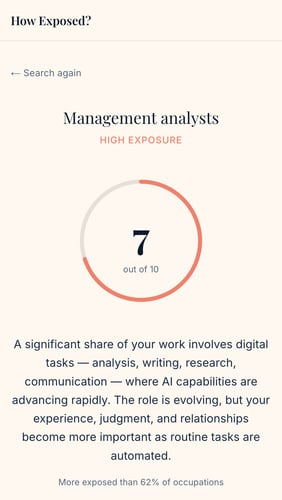
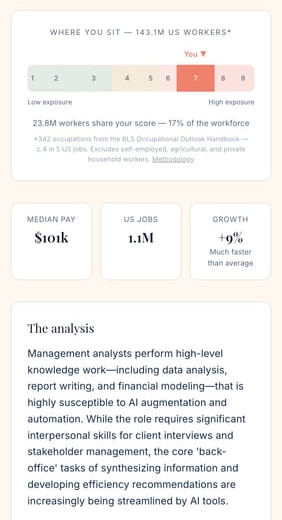
So I vibe coded HowExposed.AI — a simple search tool where you type your job title and get your score, the analysis behind it, and context on where you sit relative to the wider workforce.
I built it in a day with my AI colleague James. I went from concept to live site in a single session — domain registered, designed, coded, tested on friends, and posted to LinkedIn by the afternoon. The cards people are now sharing on WhatsApp and LinkedIn were iterated in real time based on what friends told me was and wasn't working.
The data was sourced from Andrej Karpathy's analysis. I simply added a search interface powered by the US Department of Labor's O*NET database (15,000 alternate job titles mapped to official categories), contextual guidance for each score band, and a share mechanic so people can compare scores with friends.
Search
Match
Score
Context
What I learned
The surprising complexity was in the share cards. Getting a dynamically generated image to render correctly across mobile and desktop, different browsers, and different social media platforms created a combinatorial explosion of edge cases. It gave me a genuine appreciation for the work that UX designers and app developers put in to make so many products feel seamless — that polish is harder than it looks.
I also encountered a dilemma with the data itself. The Bureau of Labor Statistics job classifications that Karpathy relied upon are somewhat broad — a surgeon and a physician, for example, share the same category despite having very different AI exposure profiles. I was tempted to add my own layer of granularity, but doing so would mean imposing my own judgements on AI impact rather than relying on Karpathy's analysis and the BLS data underpinning it. For this exercise, I decided not to open that can of worms — the value is in making existing research accessible, not in editorialising it.
What does the future of your role look like?
I hope this tool helps you understand Karpathy's analysis when it comes to your own role.
More builds coming. Watch this space.